Our services
Our Professional Mission
To empower Western Australia’s maritime community through high-performance engineering, sustainable innovation, and accessible education. We strive to protect our unique coastal environment while advancing the economic and recreational potential of our waters.
Core Services
WANI provides a comprehensive suite of maritime solutions tailored to the specific challenges of the Western Australian coastline.
Frequently Asked Questions - FAQ
Whether you’re a local "boatie," a maritime professional, or just curious about our state's "Blue Economy," here are the answers to the questions we hear most often at Western Australian Nautical Initiatives (WANI).
WANI is a collective of engineers, conservationists, and maritime experts. We act as a hub for innovation, safety, and sustainability along the WA coast. We work with government bodies, private businesses, and the community to modernize our maritime sector while preserving our seafaring heritage.
No, we are a private initiative focused on community and industry collaboration. However, we work closely with government departments and maritime authorities to ensure our projects align with WA’s broader economic and environmental goals.
Our main operations are centered in Perth, but our projects and advocacy extend from the Great Southern up to the Kimberley.
The Swan-Class initiative is a landmark project to introduce five fully electric, high-speed ferries to the Swan River by late 2027. WANI supports the technical vision and advocacy for this fleet, which aims to provide quiet, zero-emission transit between Perth, Matilda Bay, and Applecross.
We consult on eco-friendly propulsion (like electric and hybrid motors), low-wake hull designs to prevent riverbank erosion, and the use of non-toxic anti-fouling coatings that don't harm our marine life.
WANI does not directly issue licenses, but we partner with accredited training providers to offer enhanced safety workshops. Remember, in WA, you need an RST to operate any vessel with a motor greater than 6hp (4.5 kW).
To protect our biodiversity, strict rules apply. For example, vessels must not approach whales closer than 100 meters. WANI advocates for "passive observation" to ensure we can enjoy our marine giants without disturbing their natural behaviors.
We are always looking for collaborators! You can join our digital community on Reddit, Threads, or LinkedIn, or keep an eye out for our "Sundowner" networking events around Fremantle and the Greater Perth area
Yes! Our Heritage Preservation pillar focuses on the restoration and documentation of historic West Australian vessels. We believe our maritime future is built on the lessons of our past.
The "Swan-Class" Electric Ferry Initiative
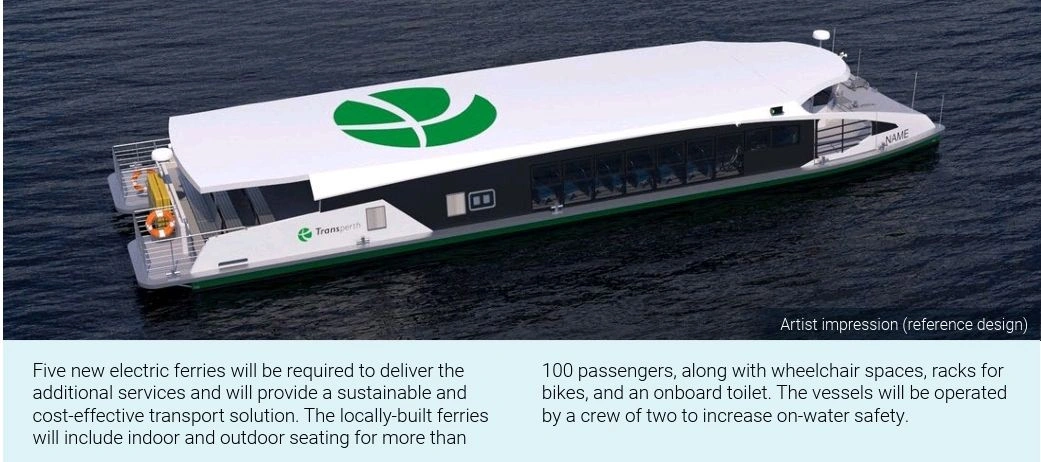
The future of Public Transport throughout our waterways is upon us.
Project Spotlight: The "Swan-Class" Electric Ferry Initiative
In late 2025, the Western Australian government catalyzed a new era for local transit by awarding a $66 million contract to Henderson-based Echo Marine Group to build the state’s first electric ferry fleet. As part of our commitment to maritime innovation, WANI has closely supported the advocacy and technical vision for this project, which aligns with the METRONET on Swan expansion.
The "Swan-Class" initiative focuses on a fleet of five modern, high-speed (25 knots), battery-electric vessels designed specifically for our local conditions. These ferries are more than just transport; they are a proof-of-concept for the future of the Blue Economy in WA.
Key Innovations
Zero-Emission Propulsion: High-capacity battery systems that eliminate diesel fumes and noise, providing a serene experience for passengers and marine life alike.
Eco-Hull Technology: Advanced "low-wake" hull designs developed by local naval architects to protect the delicate riverbanks of the Swan and Canning Rivers from erosion.
Solar-Integrated Terminals: New terminals at Matilda Bay and Applecross (slated for 2026 construction) will explore solar-assisted charging to minimize the draw on the local grid.
Accessible Design: Fully inclusive boarding and facilities, ensuring the "jewel of Perth" is accessible to every community member.
Why It Matters
This project serves as a cornerstone for WANI’s vision of a sustainable coastline. By 2027, when these vessels enter service, they will reduce carbon emissions by thousands of tonnes annually and set a global benchmark for how heritage waterways can be preserved through 21st-century engineering.
Did You Know? The new electric ferries are designed to carry approximately 140 passengers, moving them quietly across the water at speeds that rival traditional diesel craft—all while staying powered by the same renewable energy spirit that drives our state.
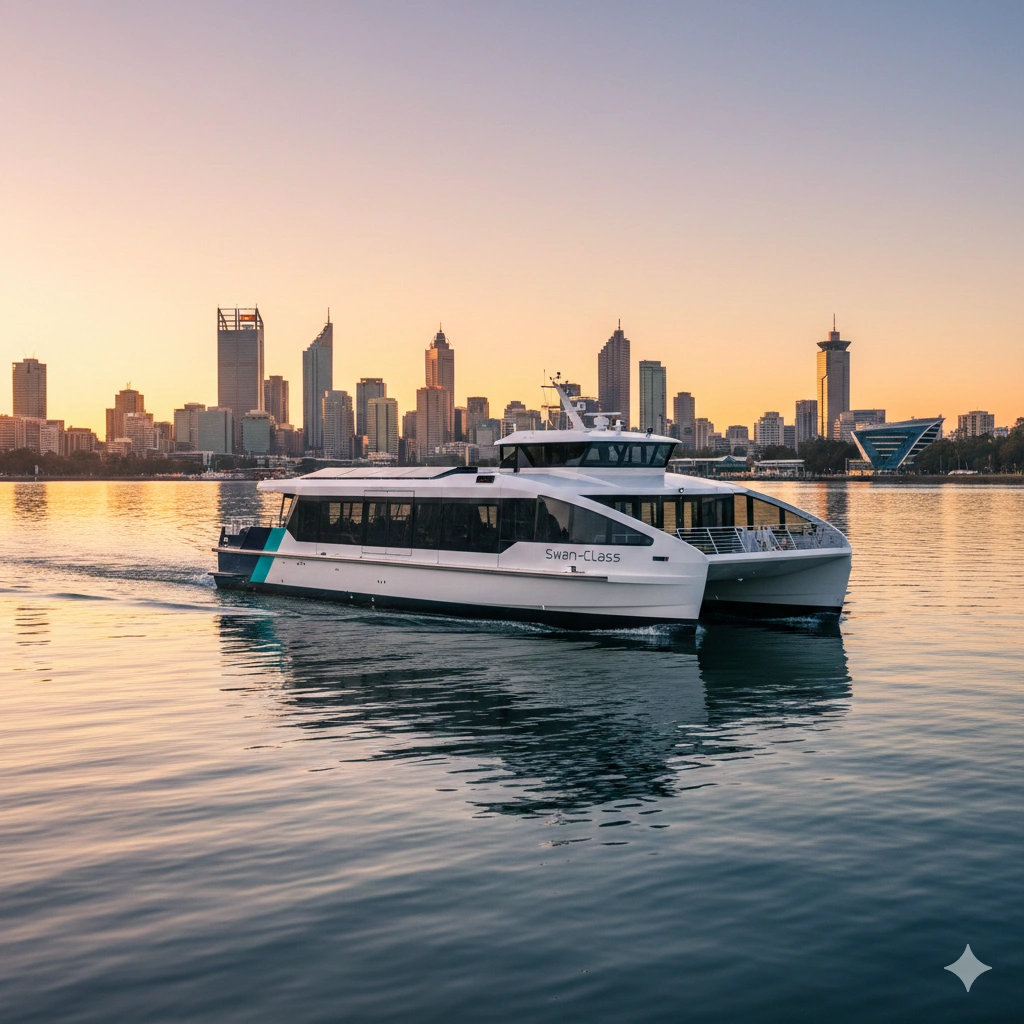
Technical Deep Dive: Powering Perth’s Future – The Engineering Behind WANI’s Electric Ferry Vision
The "Swan-Class" Electric Ferry Initiative isn't just about cleaner air and quieter rides; it's a testament to cutting-edge marine engineering meeting Western Australia’s unique environmental demands. At WANI, we believe that the future of maritime transport is electric, and understanding the core technology behind these vessels reveals why this shift is so critical for our precious waterways.
From Diesel Roar to Electric Hum: The Propulsion System
Traditional ferries rely on powerful diesel engines, which, while effective, contribute significantly to noise pollution, air emissions, and a hefty carbon footprint. The "Swan-Class" flips this script, adopting a fully integrated battery-electric propulsion system.
Key Components:
High-Capacity Battery Banks:
Technology: These aren't just oversized car batteries. The ferries utilize advanced, liquid-cooled Lithium-Ion (LiFePO4) battery banks. This chemistry is chosen for its superior thermal stability, longer cycle life (up to 10,000 cycles), and inherent safety compared to other lithium variants.
Capacity: Each "Swan-Class" ferry will feature modular battery banks totaling approximately 2-3 MWh (Mega-watt hours). To put this into perspective, that’s enough to power hundreds of average WA homes for a full day!
Placement: Strategically located below deck in watertight, fire-suppressed compartments, ensuring maximum safety and optimal weight distribution for stability.
Electric Motors:
Type: Rather than a single large motor, the ferries will likely employ dual Permanent Magnet Synchronous Motors (PMSMs). These motors are incredibly efficient (up to 97%), offer high torque at low RPMs (perfect for maneuverability), and are remarkably quiet.
Power Output: Each motor can deliver continuous power in the range of 500-750 kW (kilowatts), translating to the robust propulsion needed to maintain the vessel’s 25-knot service speed.
Power Electronics & Control Systems:
The Brains: This is where the magic happens. A sophisticated Battery Management System (BMS) constantly monitors cell voltage, temperature, and current to ensure optimal performance and prevent overcharging or deep discharge.
Inverters & Converters: These components convert the DC (Direct Current) power from the batteries into AC (Alternating Current) to drive the electric motors and manage all onboard electrical systems.
Software Integration: Advanced software controls the power flow, optimizes energy use based on route and speed, and provides real-time diagnostics to the bridge.
Recharging: The Power Grid’s New Partner
Efficient recharging is paramount for electric ferry operations. The "Swan-Class" system is designed for rapid turnaround charging.
Shore-Power Connection: At the new terminals, high-speed DC fast-charging stations will connect directly to the ferry's battery banks. This allows for significant charge replenishment during short layovers.
Grid Integration: The system is engineered to draw power efficiently from the local electricity grid during off-peak hours where possible, minimizing strain.
Future-Proofing with Renewables: The proposed solar-integrated terminals at Matilda Bay and Applecross represent the next step. While not fully self-sufficient, these installations will contribute significantly to the charging energy, showcasing a pathway towards genuinely green energy independence for the fleet.
The "Eco-Hull": More Than Just a Pretty Face
Beyond propulsion, the vessel's physical design plays a crucial role in its environmental performance.
Low-Wake Design: Developed specifically for the sensitive Swan River, the hull minimizes wave generation, protecting fragile riverbanks from erosion caused by boat wash—a long-standing environmental concern.
Lightweight Composite Materials: Utilizing advanced composites where appropriate reduces the overall vessel weight, meaning less energy is required for propulsion, further enhancing efficiency.
WANI’s Commitment
The "Swan-Class" Electric Ferry is more than a project; it's a blueprint for the future of sustainable maritime transport in Western Australia. It demonstrates that with innovative engineering and a commitment to environmental stewardship, we can transform our blue economy. WANI is proud to support the vision that makes Perth’s waterways cleaner, quieter, and more accessible for everyone.
Let's discuss your next project
Whether you're looking to partner on a large-scale marine innovation project, need technical consulting for your fleet, or just want to learn more about our community initiatives, we’re here to help. Our team typically responds to inquiries within one business day.
Stay Connected with Western Australian Nautical Initiatives
The horizon is always moving, and we want you right there with us. Follow Western Australian Nautical Initiatives across our digital platforms to get real-time updates on our latest coastal projects, behind-the-scenes looks at marine engineering breakthroughs, and vital community safety alerts. From stunning captures of the WA sunset to deep-dives into sustainable boating tech, our social community is the best place to engage with fellow maritime enthusiasts and stay informed on the future of our blue economy.
Where to Find Us
Facebook: Join our community discussions and local event pages.
Instagram: For the best views of the WA coastline and our latest vessel designs.
LinkedIn: To connect with our professional network and industry partnerships.
YouTube: Watch our project deep-dives and nautical safety tutorials.
Threads: For quick updates, maritime musings, and real-time conversation.
X (formerly Twitter): Catch the latest industry news and immediate weather or safety alerts.
Snapchat: Go "on-deck" with us for raw, behind-the-scenes stories from our field operations.
Reddit: Visit our subreddit to engage in technical deep-dives and community-led maritime Q&As.
To maximize the impact of your new social media presence, here is a strategic breakdown of hashtags and a posting schedule tailored to Western Australia’s time zone and the maritime industry in 2026.
1. The Hashtag Strategy
Mixing broad maritime tags with hyper-local WA tags ensures you reach both industry professionals and local boaties.
The "Local Legends" (For Reach in WA): #WesternAustralia #PerthLife #JustAnotherDayInWA #WestIsBest #ExploreWA #Fremantle #RottnestIsland
The "Tech & Innovation" (For the Blue Economy): #MarineEngineering #SustainableBoating #BlueEconomy #SmartNavigation #MaritimeTech #OceanStewardship
The "Industry Standard" (For Global/Professional Context): #WorldMaritimeDay #MaritimePolicytoPractice #Shipping2026 #NauticalInitiatives


Get in Touch
Whether you're looking to partner on a large-scale marine innovation project, need technical consulting for your fleet, or just want to learn more about our community initiatives, we’re here to help. Our team typically responds to inquiries within one business day.